

ON THIS PAGE
Information
System Overview
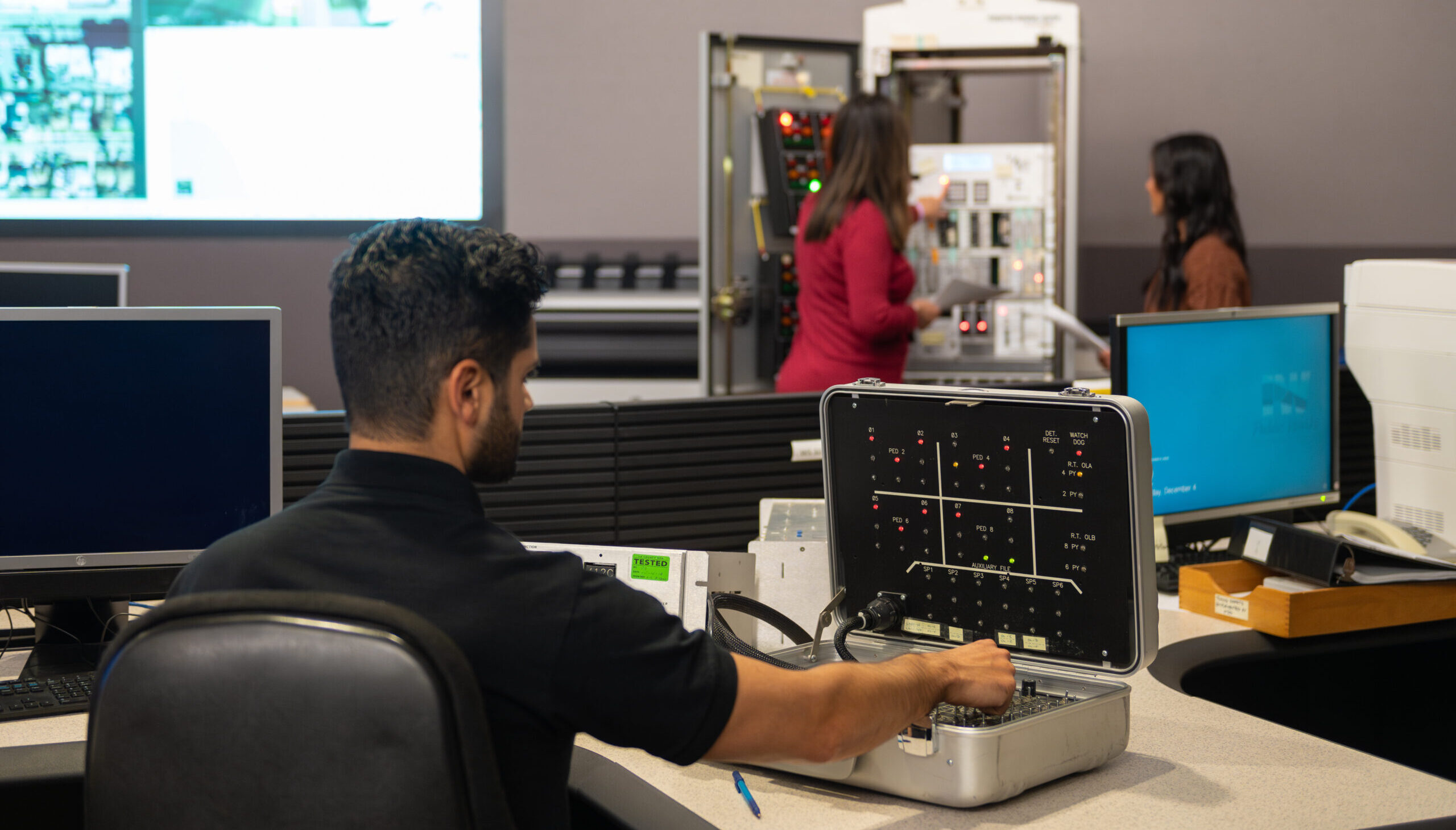
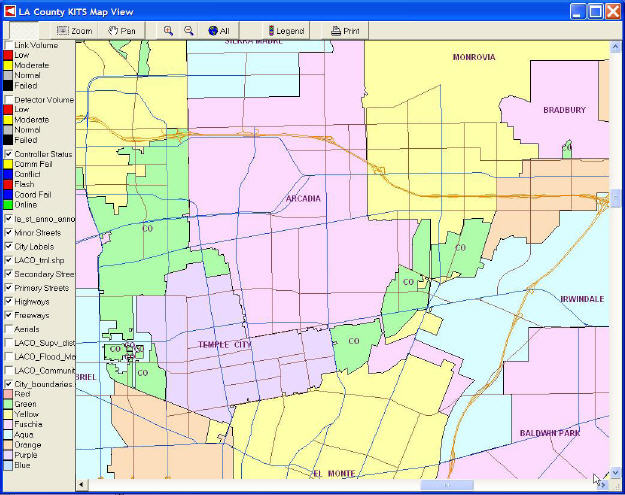
The Kimley-Horn Integrated Transportation System (KITS) is a commercial off the shelf traffic control system purchased by Los Angeles County Public Works (PW) in 2004. KITS provides for continuous monitoring of traffic conditions and traffic signal operations and builds upon the benefits achieved by the traffic signal synchronization projects completed by Public Works. The system provides once per second monitoring of traffic signals. Traffic signal monitoring provide Public Works staff with immediate notification of signal malfunctions, thereby enabling faster and more efficient maintenance responses. The system also enables traffic signal timing to be controlled and coordinated from remote workstations, including those at our Traffic Management Center (TMC) at the Public Works Headquarters facility in Alhambra. Working in conjunction with our wireless communication system and leased telephone lines, the system provides two way communications and control functions between the traffic signal controllers and both the County TMC as well as remote workstations installed in cities within Los Angeles County.
In the future, this traffic signal control system will interface with the County’s Information Exchange Network, thereby allowing for the exchange of arterial traffic data and information across jurisdictional boundaries. This information sharing will provide for implementation of arterial traffic management strategies and coordinated traffic signal operations. It also enables agencies to work together to reduce response time during incidents and emergencies. This capability to monitor and control the operation of traffic signals between jurisdictions will benefit the motorists and transit users that rely on the arterial highways.
KITS provides a wealth of traffic control and traffic engineering features designed to enhance traffic flow on arterial networks. These functions have been developed and refined over 15 years of continuous operation.
TRAFFIC CONTROL
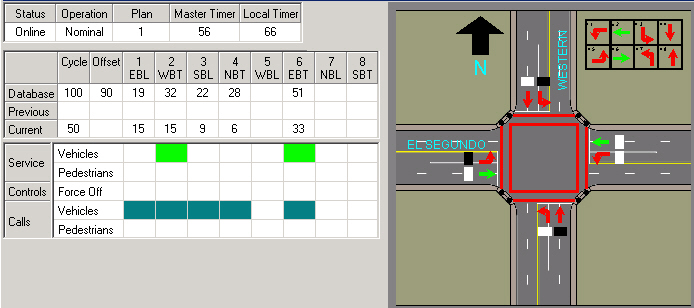
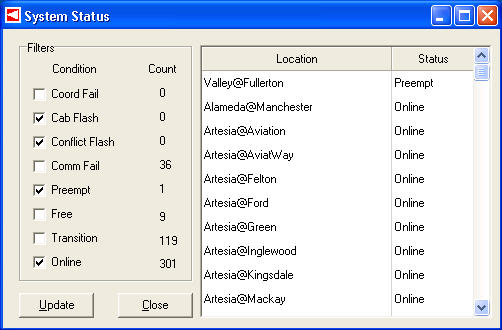
Traffic control features include support for the following modes of operation: TOD Schedules, Event Schedules, Traffic Responsive, and Manual Command. These modes of operation can be selected on a time-of-day basis or by operator command. Similarly, intersections can be assigned to a different control section by TOD schedule or operator command. A traffic control summary report allows the operator to quickly identify active control modes across the full extent of the system. In addition, a current command display provides a list of all active manual commands.

This flexibility allows the traffic engineer to configure and refine the system to meet the demands of predictable traffic patterns. KITS functionality goes well beyond control of the predictable. A commonsense approach to congestion management provides additional features designed to mitigate unusual traffic conditions created by incidents, weather, or other causes.
TRAFFIC ENGINEERING
Functions include:
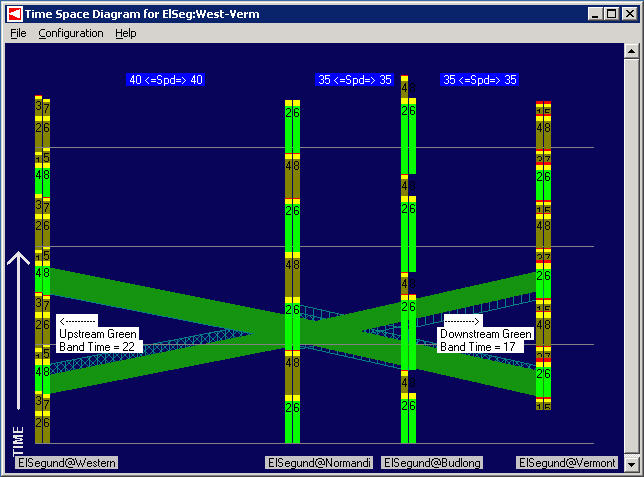
Integrated time/space diagram with drag-and-drop offset modification.
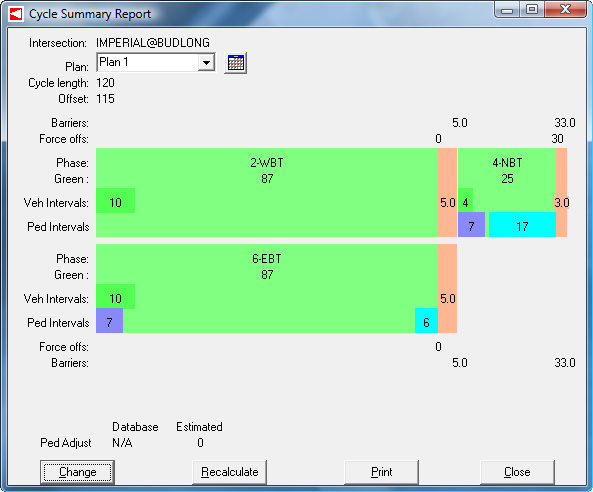
Collection and reporting of detector data including volume, occupancy, and speed for planning and timing plan development Editing of signal controller databases including edit, download, upload, and import functions.
INCIDENT MANAGEMENT
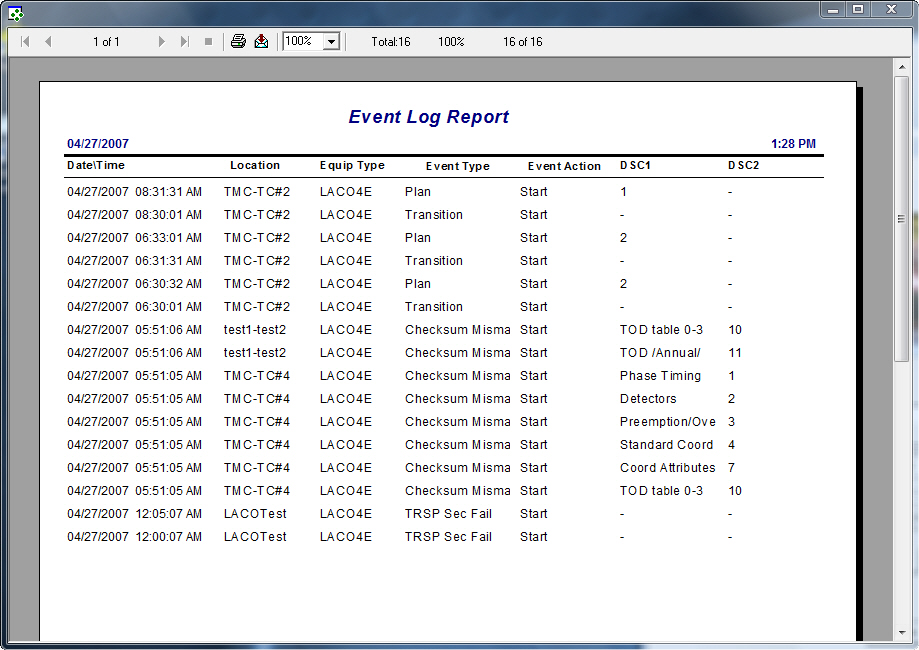
KITS provides a comprehensive database capability to record and track incidents over time. An operator that manages an incident can edit and store a wide range of information related to the incident. This data is available through reports for historical analysis.
SECURITY
KITS provides comprehensive security provisions that can be tailored to meet an agency’s needs. An operator with administrative security access can configure roles within the system.
MAINTAINENCE
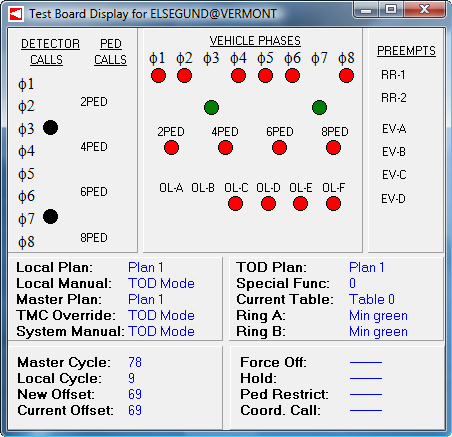
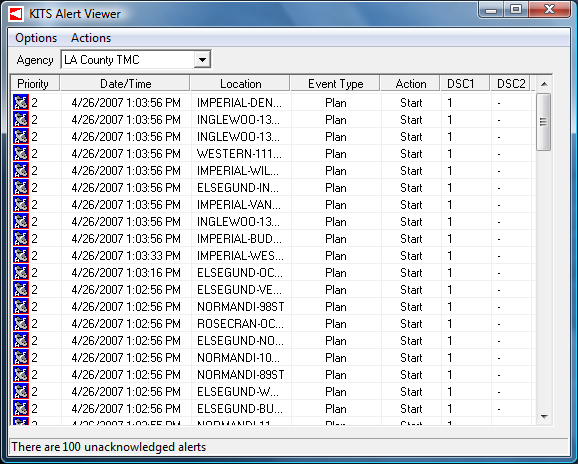
Effective maintenance of transportation system components is critical to successful traffic operations. KITS provides equipment monitoring, failure alerts, diagnostic displays, and historical tracking of all system components.
DEVICES
A partial list of supported device types includes the following:
Loop and video detectors
Model 170
CCTV cameras
Video switches
Concept of Operations
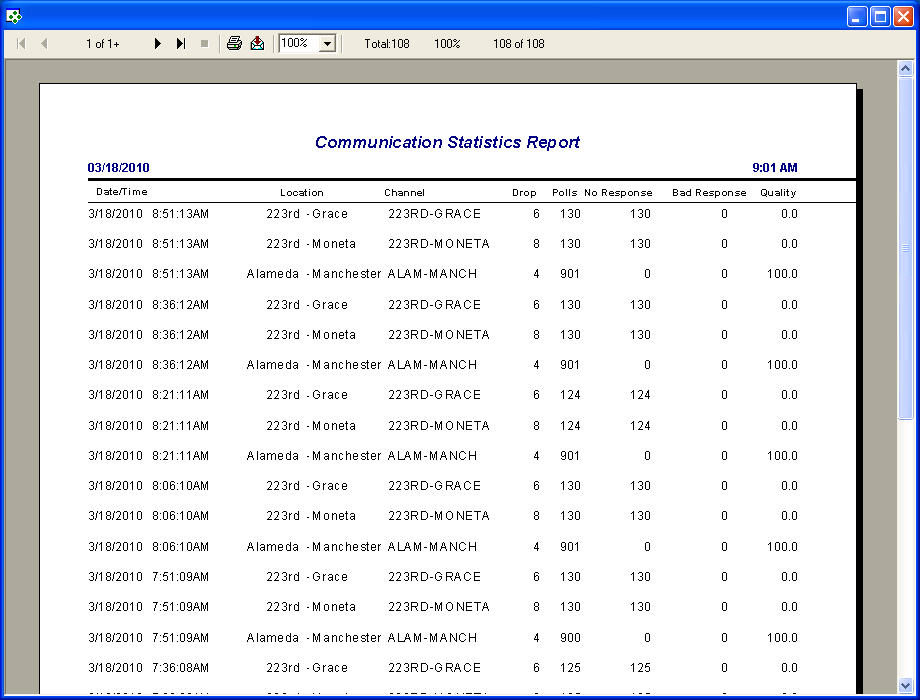
The system facilitates the supervision of event management for establishing and enhancing real-time transportation management and traffic control in the County. The system allows multiple categories of users to participate in event management, incident management, developing traffic control strategies, and retrieving and evaluating results. The system provides reports that include system performance data. In addition to standard reports included with KITS, the user can create customized reports that can use data available from the relational database. KITS provides the following primary modes of traffic control:
- Manually controlled system elements. The user with proper privileges can select a timing plan to run for a particular intersection. This plan will continue to run until it is canceled.
- Time-Of-Day system elements controlled via an automated time-of-day schedule. This includes intersections as well as cameras and the video wall, if these elements are included with the deployed version of KITS.
- Traffic Responsive system elements controlled based on responses to traffic flow data received from sensors on the roadway.
Deployment Status
As of August 15, 2012, the County of Los Angeles Department of Public Works has deployed KITS to more than 500 intersections and has the ability to support over 1000 intersections. Included in the 500 intersections under LA County’s KITS are intersections deployed in neighboring cities. A list of these cities are noted below:
- Baldwin Park
- Bell
- Carson
- Commerce
- Covina
- Duarte
- El Monte
- El Segundo
- Hawthorne
- Huntington Park
- Industry
- Irwindale
- La Mirada
- La Puente
- Lawndale
- Lomita
- Lynwood
- Manhattan Beach
- Monrovia
- Paramount
- Pico Rivera
- Redondo Beach
- Rosemead
- San Dimas
- San Gabriel
- Temple City
Manuals
KITS User Manual
The KITS user manual is a useful resource that provides assistance to a user navigating through the KITS user interface. When using KITS, this resource can be accessed at anytime by pressing the F1 key. The user manual can be found here.
Highlights of LACO-4E and Manual
- Flexible Barrier Structure – This program is not restricted to the “Standard 8 phase quad” ring structure of other Type 170 controller-based programs. It allows the user to customize the ring structure of each intersection in a variety of configurations.
- AB3418E Slave and/or Master – Complies with the original AB3418E Specification for Slave mode. Also supports AB3418E Master mode in that it can transmit Time and Date to AB3418E compliant Slave controllers.
- Multiple communication capabilities – LACO-4E is capable of Central system to controller communications, and controller-to-controller communications.br> ts Los Angeles County standard coordination and Zip Coordination, which is an abbreviated form of coordination logic.
- The most user-friendly User Interface available for the Type 170 controller platform – No memory paging schemes. All memory is directly accessible with either three keystrokes (for addresses in 1st two(2) Kbytes of memory) or five(5) keystrokes (for all other memory locations). Any memory location in the entire 170E controller memory map can be viewed in either hexadecimal or decimal format.
- Built in User-Data Validation – LACO-4E filters most critical data continuously to protect the program from invalid data entry.
- Intuitive Programmable Logic feature, including AND, OR, XOR logic, timers and switches, to modify default input and output logic.
- Integrated Intersection Flashout feature – This feature allows maintenance personnel to verify field to controller wiring without swapping out program EPROMS.
- Supports 68HC11 processor and Quad UART, with 64 byte receive and transmit FIFO’s.
- Central System support using the AB3418E protocol.
- Bus Signal Priority logic – A non-preemptive routine designed to move transit vehicles more efficiently through intersections.
Contact Us
LA County Department of Public Works
Alvin Ly
aly@dpw.lacounty.gov
(626) 300-4772
Marty Amundson
mamund@dpw.lacounty.gov
(626) 300-4774
Phil Phan
pphan@dpw.lacounty.gov
(626) 300-2031
Kimley-Horn and Associates
Jason W. Castillo
jason.castillo@kimley-horn.com
(602) 906-1108
Seth Searle
seth.searle@kimley-horn.com
(626) 300-4772