


Customer Information
The sewer system within the County of Los Angeles Consolidated Sewer Maintenance District (District) is comprised of a series of underground pipes. Many are publicly owned; however, the sewer laterals are entirely owned by the private property owner they serve. The laterals extend from the building to the mainline within the street (or within an easement at the rear of your home). The laterals typically range from four to six inches in diameter, while the District’s mainline is typically at least eight inches in diameter. The private property owner is responsible for the entire length of the lateral, which includes that portion that may be located within the public right of way (under the asphalt and street landscaping).
Maintaining Your Sewer
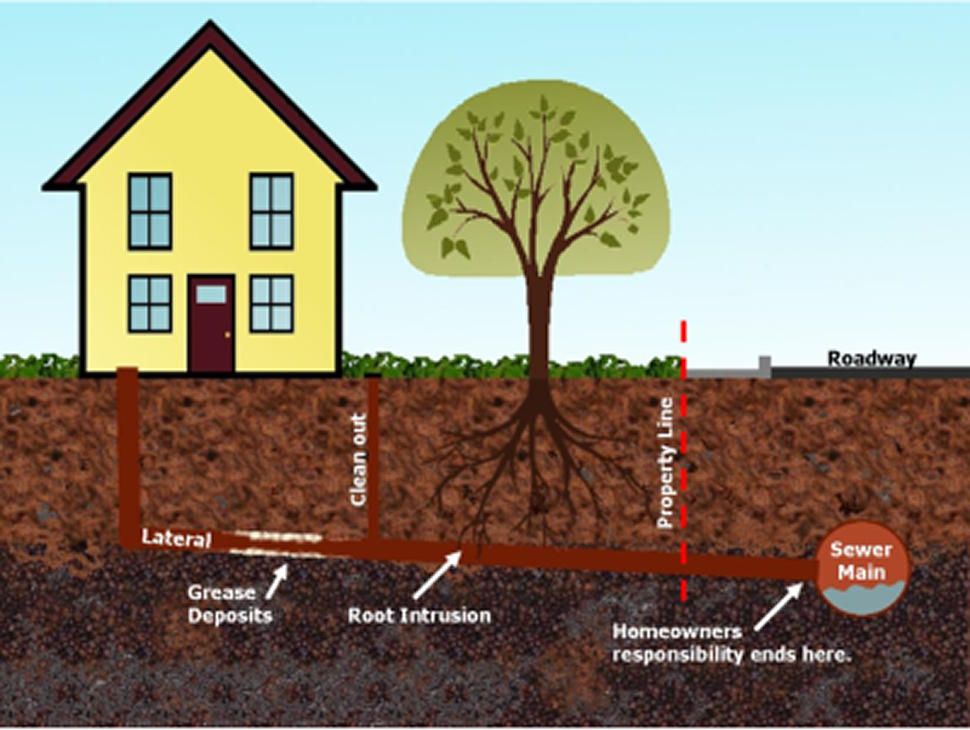
Did you know that, as a homeowner, you have responsibility for the effective functioning of the sewer system? Homeowners are required to maintain the sewer line (also known as lateral) from their home to the main sewer line, typically located in the street or nearby easement. Maintaining the lateral includes keeping the lateral line flowing and free of debris such as roots or grease.
Courtesy Notice
Have you received a notice indicating we found roots or other debris in your home lateral sewer line?
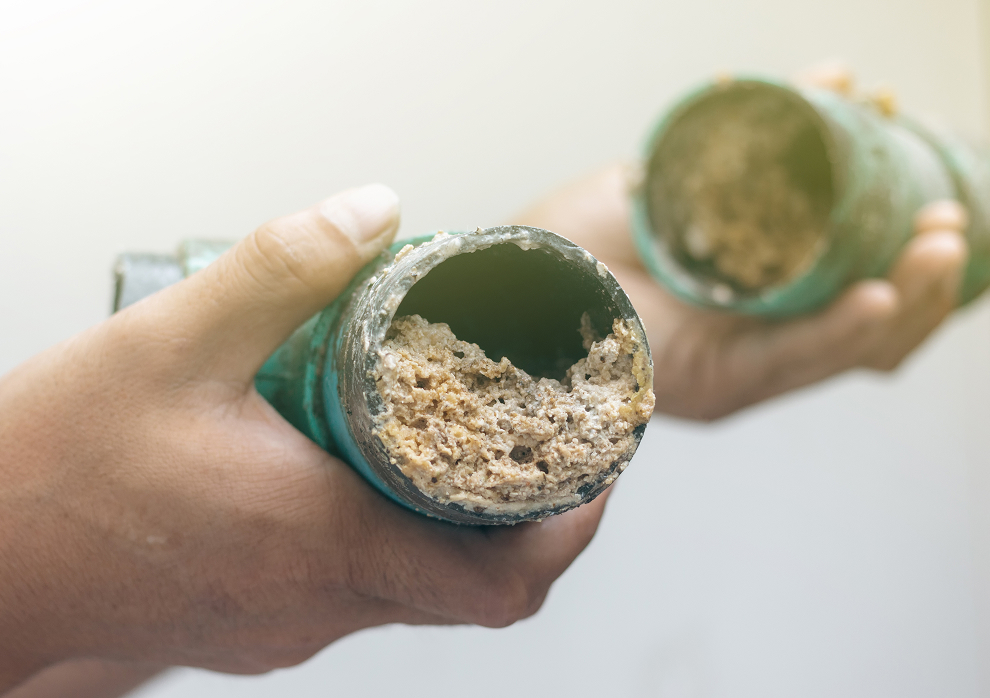
Through routine maintenance activities or through our Condition Assessment Program CCTV inspection project, we found your home’s sewer lateral has roots or debris in the line, and/or soon will be impacting the main sewer line. Please follow the actions requested on the letter to both help prevent a sewer backup into your home or a sewer backup or overflow in the main sewer line.
County Code 20.24.080 Maintenance of Sewer Laterals, which states: All house laterals, industrial connection sewers, septic tank outlet connections to STEP system, and appurtenances thereto existing as of January 23, 1953, or thereafter constructed, shall be maintained by the owner of the property served in a safe and sanitary condition, and all devices or safeguards which are required by this Division 2 for the operation thereof shall be maintained in good working order
Preventing Sewer Backups
Sewer backups can cause tremendous damage to the interior of a home. In order to minimize these, the District provides continual maintenance services for the public sewer mainlines.
Unfortunately, private property owners often do not maintain sewer laterals until a disaster strikes. Out of sight, out of mind is a typical approach to sewer lateral maintenance and operation by many. It is our hope that we can provide you with various means of addressing these issues and thus minimize your risk of an overflow entering your home. Taking these simple steps can help keep the flow going and prevent costly overflows and damage:
Keeping fats, oils, and grease out of your sewers
Check out the Do’s and Don’ts of FOG.
| DON’T | DO |
|---|---|
| Wash food scraps (solid or liquid) down the drain, dump them in the toilet, or grind them up in the garbage disposal. | Use mesh drain strainers to catch solid food scraps for disposal in a trash can. Pour liquid food scraps, e.g. sauces, milkshakes, into a container and place in the trash can. |
| Wash contents of soaking pots and pans down the drain. | Scrape plates over the trash can or dry wipe with a paper towel. |
| Pour used oil down the drain. | Pour used oil into a container with a top (the original if available) so it can be reused, recycled, or placed in the trash can for disposal. |
| Pour hot grease (including poultry skimming) down the drain. | Pour cooled grease into a grease can or other container for disposal and/or absorb with paper towels or newspaper. |
| Pour grease down the storm drain. | Pour cooled grease into a container, seal it and place it in the trash. |
Install a Back Water Valve
Most properties have been built so that an obstruction in the public sewer will not cause a sewage backup into the property.
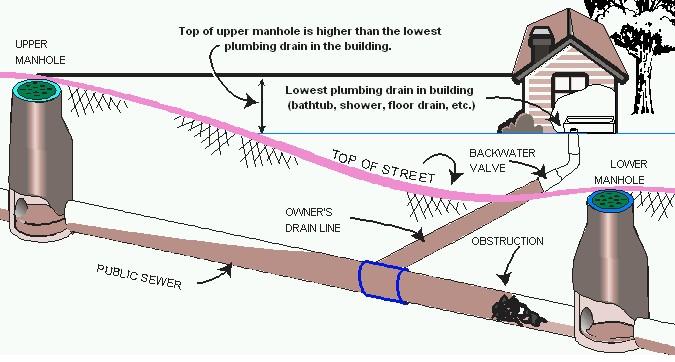
Some properties, however, require the extra protection of a backwater valve in the owners drain line. These properties have been built so that the drain of the lowest plumbing fixture (bath tub, shower, etc.) is lower than the upper manhole of the public sewer. The backwater valve is designed to automatically shut to prevent leakage out of the plumbing fixture if sewage from an obstructed public sewer backs up the owners drain line.
If you have a backwater valve, regular maintenance is required to ensure that it is operating properly at all times.
Receive a sewer maintenance notice?
Have you received a notice indicating we found roots or other debris in your home’s lateral sewer line?
Through routine maintenance activities or through our Condition Assessment Program, we found your home’s sewer lateral has roots or debris in the line and/or will soon be impacting the main sewer line. The county code below indicates that it is the homeowner’s responsibility to maintain the sewer lateral of their house. Please follow the actions requested in the letter to help prevent a sewer backup into your home or a sewer backup or overflow in the main sewer line.
Rules & Regulations
Keep up to date with the current Sanitary Sewer rules and regulations. Below are several resources for your convenience.


New Sewer Connections
Maintenance Plan Check Process
The required submittals for plan check reviews include a copy of the sewer plans in PDF format, the final or approved tract map, grading plans and as-built drawings for the connecting outlet sewer, and contact information for both the engineer of record and the City’s plan checker. Submissions may be emailed to smdplancheck@dpw.lacounty.gov.
Additionally, an annexation fee must be paid for areas not within the Consolidated Sewer Maintenance District (CSMD); this fee is collected as the plan check process nears approval.
All plans must adhere to the standard CSMD plan border template. CAD templates are available under the section titled “Border Sheets for Consolidated Sewer Maintenance District (CSMD).”
Note: These instructions apply to CSMD member Cities (City jurisdictions only). For unincorporated areas, plan check reviews are handled by the Land Development Division.
Tap & Saddle
A “tap and saddle sewer” refers to a method of connecting a house’s sewer line to the city’s main sewer without having to dig up a large section of pipe.
The process uses a special fitting called a “saddle” which is clamped onto the main pipe. This allows a hole to be cut into it to create a new connection point, essentially “tapping” into the existing sewer line.

