


ON THIS PAGE
Overview
Building a More Connected Los Angeles County
The Los Angeles County Transportation Demand Management (TDM) Ordinance is a proposed County regulation that will provide a coordinated set of strategies designed to support community circulation, growth and quality of life. The ordinance aims to reduce unnecessary car trips and expand access to walking, biking, and public transit, in order to create safer, cleaner, and more connected communities.
Announcements
Join the conversation. Los Angeles County Public Works want to hear from you!

Community Meeting
Join our first Online Community Meeting:
Register for the Zoom webinar
Thursday, November 5, 2026
6:00-7:30pm
Register Here

Stay Connected
Sign up for project news and meeting reminders to ensure you have every opportunity to participate in shaping the County’s TDM Ordinance!
Submit a question or comment today!
Email the team at: TDM@dpw.lacounty.gov
What is TDM?
Transportation Demand Management, or TDM, refers to policies, programs, and physical improvements that help people travel more efficiently, often by making alternatives to driving more convenient and attractive. Rather than focusing on building new roads, TDM strategies improve how we use existing transportation systems. They can be implemented at individual developments or across broader areas.
TDM strategies are designed to offer reliable, affordable, and flexible alternatives that can improve daily travel and community life. Common TDM strategies include:
- Providing secure bike parking, transit passes, or carpool incentives
- Supporting mixed-use development that brings destinations closer together
- Improving access to transit and walkable environments
- Offering flexible commute options like telework
Why it Matters
The TDM Ordinance could support a transportation system with expanded travel options. The program aims to reduce car dependence and expand options so people can travel with greater convenience and reduced emissions. These efforts align with State climate policies and the County’s General Plan, Housing Element, Climate Action Plan, and Sustainability Plan.
Examples of TDM Strategies
Programs & Incentives
- Carpool/Vanpool Programs: Establish preferred parking zones and use apps or ride-matching tools to encourage shared rides.
- Transit Pass Subsidies: Provide discounted or free transit passes to encourage the use of buses or trains.
- Parking Cash-Out Programs: Offer an option to receive cash instead of using on-site parking when choosing other travel modes.
Infrastructure
- Bike & Pedestrian Infrastructure: Bike racks, lockers, showers, street lighting, and improved sidewalks to support walking and biking.
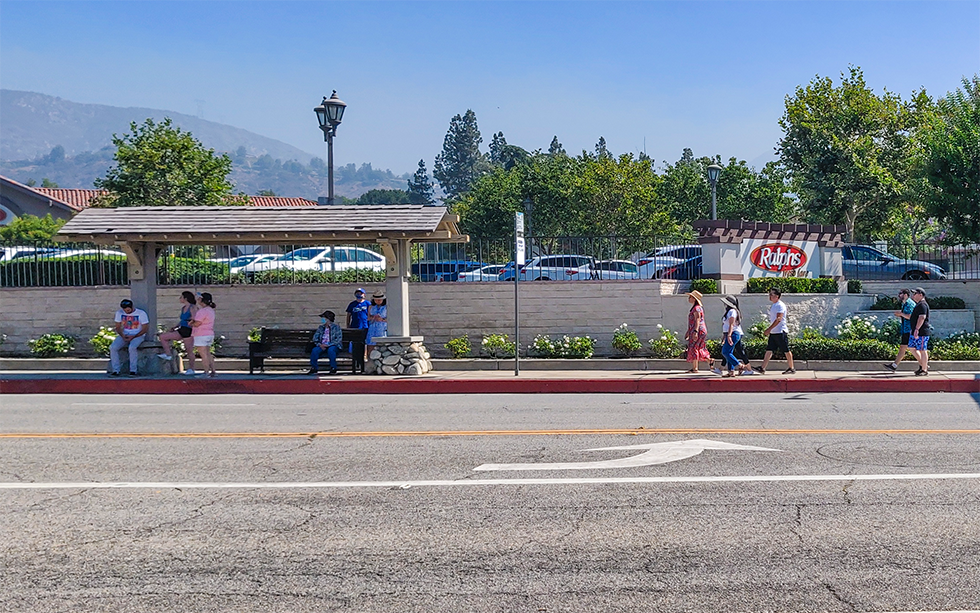
- Transit Amenities: Benches, shelters, and real-time transit information displays.
Land Use Strategies
- Affordable Housing: Build affordable housing, particularly in compact, transit-oriented developments, enables lower income households to live closer to amenities, jobs, and public transportation.
- Mixed-Use Development: When housing is denser and mixed with commercial and retail spaces, residents have easier access to daily needs, reducing the need for long car trips.
These strategies can be tailored to the needs of residents, workers, and visitors in different types of developments across the County.
Benefits
By shifting focus from moving cars to moving people, TDM helps create changes in how people travel, offering alternatives to driving alone.
TDM strategies reduce vehicle trips and offer benefits, such as:
- Opportunities for lower travel and transportation costs
- Expanded transportation options
- Changes in parking demand
Everyone Wins
The County’s TDM Ordinance strategies are designed to create safer, cleaner, and more connected communities for everyone.
| Residents | – More transportation choices beyond driving alone – Lower transportation costs through transit, carpooling, biking, and walking – Reduced traffic around neighborhoods – Improved access to jobs, schools, and services – Greater flexibility in how and when traveling |
| Businesses | – Helps attract and retain employees by providing transportation options – Reduced demand for employee parking – Potential savings on parking and transportation costs – More flexible commute options for employees – Can support sustainability and corporate-responsibility goals – Amenities that support changing mobility needs |
| Commuters | – More alternatives to driving alone – Potential savings on fuel, parking, vehicle maintenance, and tolls – Reduced commuting stress – More predictable travel options – Ability to use commute time more productively when using transit or shared transportation |
| Developers | – Can help meet project transportation and VMT-reduction requirements – May reduce parking demand and associated construction costs – Provides flexibility through a range of transportation strategies – Can result in more attractive, amenity-rich projects which are more attractive to residents, tenants, and employees – Supports more efficient, multimodal development |
| Environment | – Lower greenhouse-gas emissions – Cleaner air – Reduced urban heat and stormwater impacts when paired with green infrastructure – Lowers fuel consumption – Supports more sustainable transportation patterns |
Additional Resources
Handout
Community Meetings
- Join our first Online Community Meeting: Register for the Zoom webinar.
Thursday, November 5, 2026
6:00-7:30pm
Register here
Survey Findings
- Pending the close of the survey
Contact Us
There’s more than one way to get involved!
Public Works is in the early stages of developing the County’s Transportation Demand Management (TDM) Ordinance. Your input is important in crafting regulations that reflect the needs of local communities and support transportation access.
Submit a comment or sign-up to follow and receive project news and invitations. TDM@dpw.lacounty.gov
Project Contact Information
Phone: 626-300-4752
Email: TDM@dpw.lacounty.gov