

Debris Basin
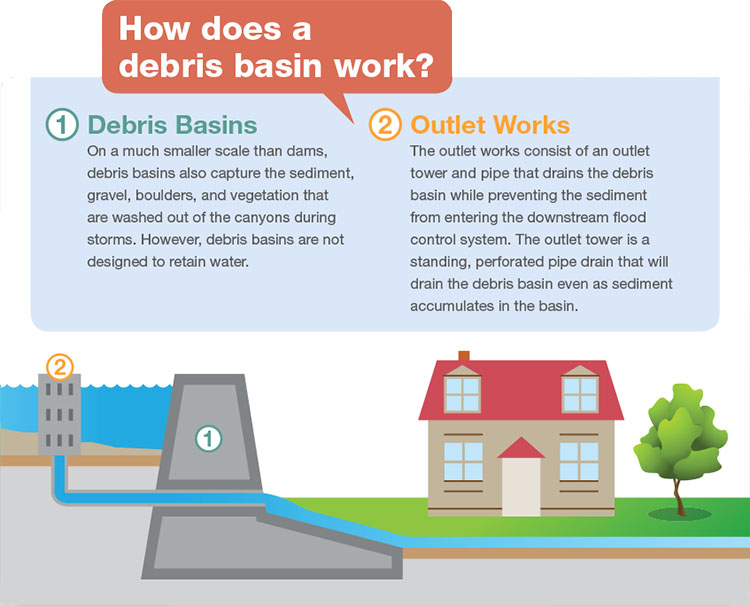
Debris basins are key components of the flood control system. Typically located at the mouths of canyons, they capture sediment, gravel, boulders, and vegetative debris washed out of the canyons during storms. The basins allow water to flow into the downstream flood control system while holding back these materials. If debris were allowed to flow downstream, blockages could occur, causing localized flooding and property damage. High sediment loads in storm flows also accelerate wear on concrete channels and drains, shortening their service life and necessitating large-scale, multi-million-dollar reconstruction projects. These projects can have additional environmental impacts, including traffic delays and noise. By capturing debris in basins, the drainage system remains clear, operates smoothly during storm events, and enjoys an extended service life.
Once debris basins fill with sediment, it is critical to remove the material promptly to ensure there is capacity for future storms. Clean-outs can range in scale from 1,000 to 300,000 cubic yards (one cubic yard is roughly the size of your washing machine at home; the Rose Bowl in Pasadena would hold about 400,000 cubic yards). Depending on a basin’s size, clean-outs may take anywhere from two days to several months. Without sediment removal, basins cannot provide adequate flood or debris protection, leaving downstream homes vulnerable to damage from future debris flows.
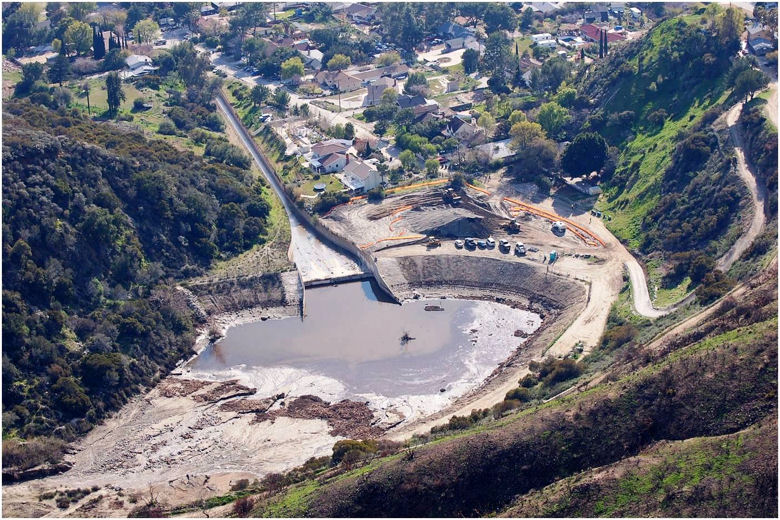
Moving sediment out of a debris basin requires excavation equipment and numerous dump trucks. Because debris basins protect neighborhoods—most often residential areas—these trucks must use local streets to transport sediment to Public Works’ placement sites or other disposal locations. This work inevitably causes temporary impacts, including dust, noise, and increased traffic along haul routes. However, without basin cleanouts, far greater risks—such as debris flows and localized flooding—could result in severe damage and threaten residents’ safety. Recognizing these trade-offs underscores the importance of tolerating short-term inconveniences for long-term community protection.
Flood Control and The Economy
Although Public Works endeavors to minimize impacts from its debris basin clean-out and sediment hauling work, regrettably the work causes unavoidable short term disruptions to nearby residents. However, the efforts are vital to provide flood control services to facilitate a stable economy. With this necessary maintenance work, the debris basins, along with the drains and channels of the flood control system, operate as designed to safeguard the communities in which the 10 million residents of Los Angeles County live and the businesses the provide goods and services to them and others. Even during the storms of the 2004-05 storm season, the second wettest year on record, the vast majority of employees drove to work along passable roads; businesses shipped their products to market; students attended school; and umbrella toting residents didn’t have to give a second thought about the integrity of their houses or places of work during storms. This could not occur during major storm events without a properly maintained and reliable flood control system.
Channels
The topography and location of Los Angeles County create a high potential for flooding. With the Pacific Ocean providing a perpetual source of moisture, storms can drop several inches of rain over a relatively short period of time. The Los Angeles County flood control system was designed to convey run-off from streets and occupied properties as fast as possible. The flood control channels we drive over on a daily basis are able to quickly move vast amounts of run-off, thereby protecting property and lives in the process.
At the same time, however, as Southern California is primarily a desert environment, Public Works strives to conserve storm water runoff generated during storm events. To accomplish this, Public Works operates 27 groundwater recharge or spreading facilities, which are adjacent to some of these channels. Public Works directs the storm water from the channels to percolate back into the groundwater table. Local water companies or water rights holders can then pump the water to the surface for water supply purposes.